Editor’s note: if you’re not yet a subscriber to Golden Opportunity, you can sign up to receive my newest gold and gold stock analysis (for free) here.
The latest US Treasury report of Foreign Holdings is out.
The headline number: foreigners sold $233 billion worth of Treasuries since February. China sold $61 billion, or about ~10% of the $600 billion it still owns.
Our “ally” Japan sold $123 billion (again, about 10% of their total Treasury holdings) which was enough to spook Treasury Secretary Scott Bessent to step in and help shore up the Japanese Yen.
How did he do it? Well, he had to sell Euros…
It’s believed that in the midst of this BOJ rescue, Bessent warned other allies not to try to sell their Treasuries.
Bessent let Japan tap the seldom used Swap line to borrow dollars against US Treasury holdings to avoid Japan selling any USTs.
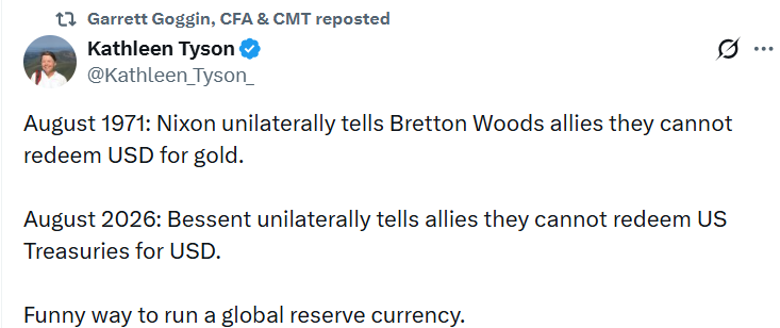
This development sparked @Kathleen_Tyson to tweet:
Bessent is doing everything he can to avoid simply running the printing press – so all of his moves so far have been shuffling paper around. He’s been buying long-dated US Treasuries by selling short dated US Treasuries. Selling Euro bonds to inject cash into the BOJ.
He really doesn’t want to tap the Fed anymore than he already is – but the Fed too is ramping up Treasury purchases.
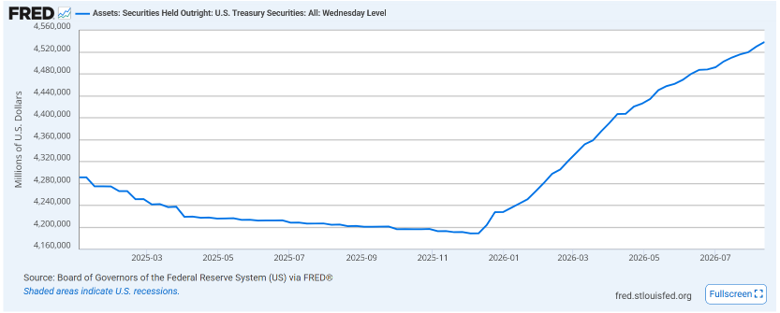
After attempting to unwind the Fed balance sheet since 2022, the Fed resumed its Treasury-buying program again in late 2025.
You might notice that the amount of Treasuries the Fed owns has ticked up about $250 billion since February. That’s pretty close to the amount sold by foreign holders over the same time period.
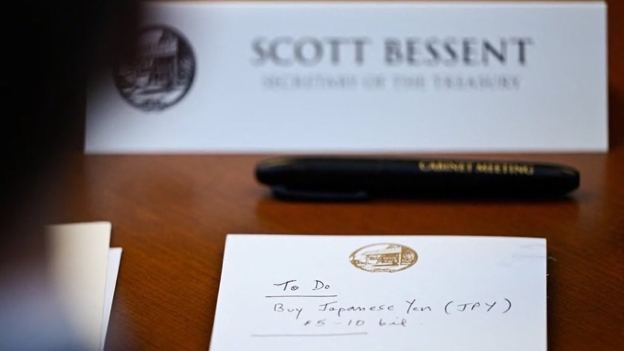
Spotted on Bessent’s desk earlier this week is a to-do list:
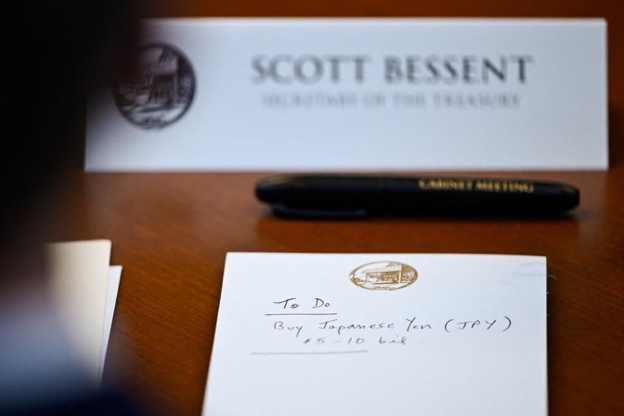
It’s a bit more elegant than writing “stop the Japanese from selling more Treasuries” but it’s basically the same thing.
Japan still owns the most Treasuries of any foreign holder with $1.19 trillion. Coming in second is the UK holding $927 billion, and then China is in third with $652 billion.
But why sell now?
Many US allies know that dumping US bonds is not the polite thing you do, if you can avoid it.
But every other country has the same kind of financial/monetary problems that the US has. High deficits. Out of control entitlement spending. High debt:GDP with no way to tax enough to make a dent. No political will to cut spending, etc.
Every major central bank is more or less in the same mess as the US. Japan in particular has terrible debt:GDP, higher than any country in history. The Yen has been weakening for years, and the only way for Japan to defend its currency is to sell US dollar holdings and buy Yen.
But the kind of selling that can move the needle for the Yen also moves the needle for US bond yields – and not in a way that helps the US.
The effect of all of this selling of US debt is a rise in yields, especially on longer dated Treasuries.
With rates rising there’s an increased motive for selling – not just for foreign holders, but for everyone unfortunate enough to be holding older issuance that’s paying lower rates.
Higher rates on new issuance means the price of the older Treasuries are crashing.
30-year bonds in particular are at 19-year high yields, meaning that if you bought a 30-year Treasury at any point in the past two decades, you are seeing the price of your bond crater day by day.
Consider a 30-year bought just 5 years ago during the absolute lowest rates ever for the security – around 2%.
The price impact for that bond is a 40%+ decline.
It’s getting ugly and Bessent is running out of ammo. The only move left is pure monetization from the Fed.
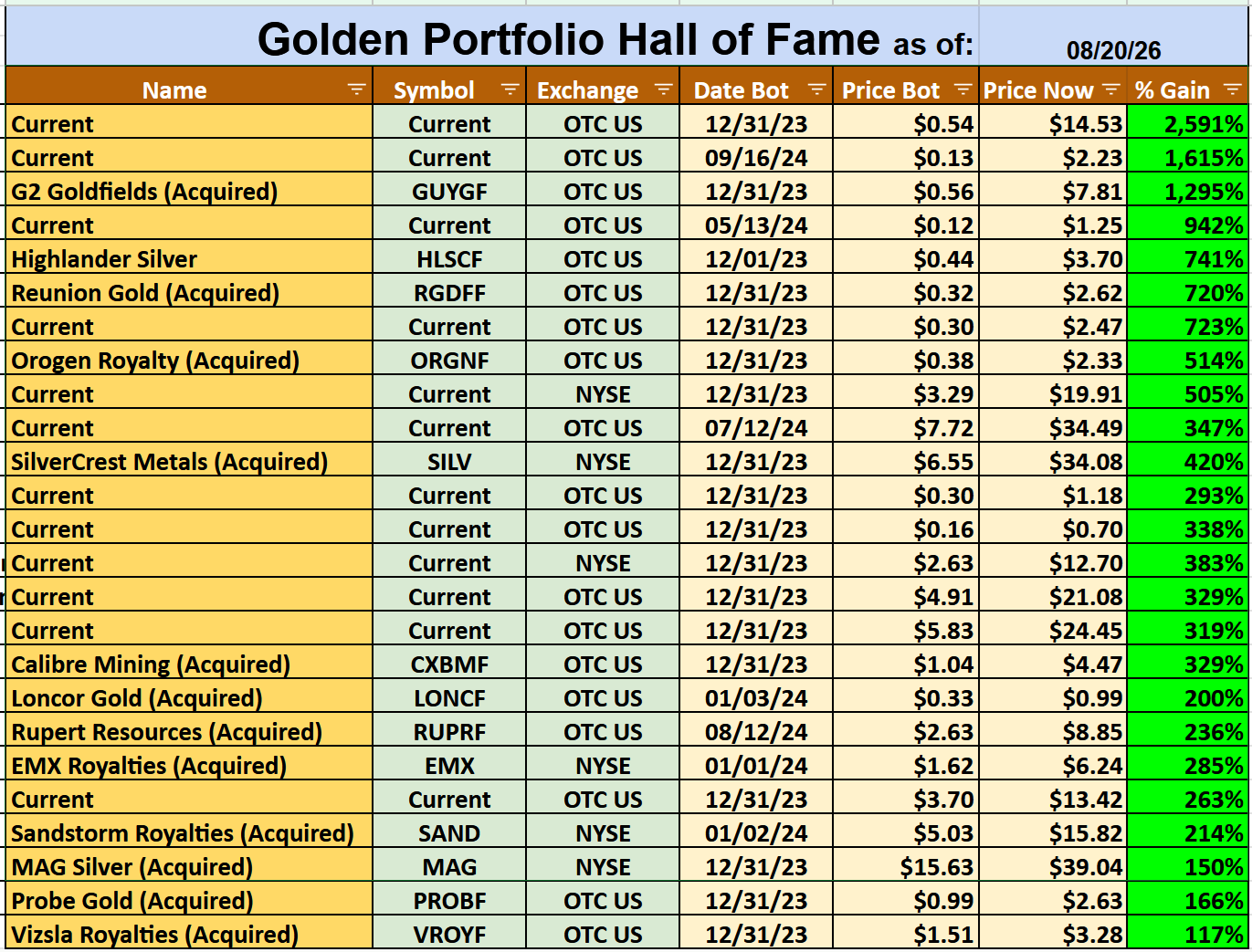
Gold is already spiking in response but I think we’re just getting started.
It’s going to be wild. Stay tuned!
Best,
Garrett Goggin, CFA, CMT
Lead Analyst and Founder, Golden Portfolio
P.S. If you’d like to receive (free) issues of Golden Opportunity in your inbox: click here to sign up.