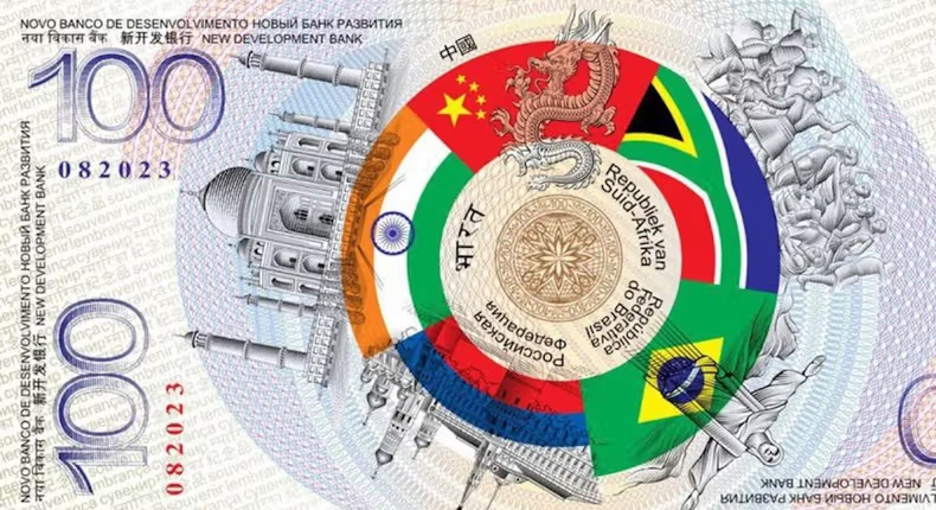
Students of monetary history are well familiar with the now-decades old assertion that BRICS (the loosely affiliated trade group comprising Brazil, Russia, India, China and South America) is going to somehow, someway dethrone the dollar.
The concept of BRICS started in 2003 (and back then, it was just BRIC – South Africa wouldn’t join the acronym until 2011.) Eventually, the concept turned into a kind of unofficial union that’s been slowly coalescing – leading up to a conference next month to discuss (among other things) the possibility of a new joint currency.
What do these countries have in common? Why did they form this loosely affiliated union?
Culturally, geographically, ethnically, socially – these countries have nothing in common. They could not be more different. If you doubt this assertion, go ahead and misname someone from China as Indian, or someone from Russia as Brazilian. At best you’ll encounter confusion, at worst, a punch in the nose.
The one thing this group has in common is economic. All 5 countries have seen massive ascension over the past 4 decades and together, they now dwarf the US in terms of total GDP.
With the outside exception of China, none of them are close to eclipsing the US in terms of economic power. Also, they’re all major economies outside of the US-Europe economic zone of influence. And especially in a post-Russian sanctions world, all of them bristle at having to conduct business in US dollars. It was tiresome and inconvenient before 2022.
After 2022, it’s a real irritant that all of these major economies would love to get rid of. Why would they have to conduct business in dollars? Why should they?
New Rules for Banks Give Investors a Shot at Generational Wealth in Gold
New regulations, known as Basel III, are quietly forcing gold back into the monetary system. Banks are scrambling to meet the new rules. But the biggest profits won’t go to bullion buyers…
Click here to find out how gold royalty stocks could hand you generational wealth.
If your google skills are up to snuff, you might be able to find whispers of the BRICS potentially challenging the G6 as far back as 2003.
Goldman Sachs released a now infamous paper back then called “Dreaming With BRICS: The Path to 2050.”
One relevant quote from this paper: “The results are startling. If things go right, in less than 40 years, the BRICs economies together could be larger than the G6 in US dollar terms. By 2025 they could account for over half the size of the G6. Of the current G6, only the US and Japan may be among the six largest economies in US dollar terms in 2050.”
I bring up this ancient history to point out that the dollar’s reign as the world’s reserve currency has been called into question since at least 2003 in the context of BRICS.
The lesson: it takes a long time to make big changes in world currencies. The dollar has been the dominant currency for over a century. That hasn’t changed since Goldman Sachs made up the acronym 22 years ago, nor has it changed since BRICS noticed that they actually do kind of share some common economic characteristics.
It won’t change overnight if/when BRICS formalizes a joint currency.
But they finally are acknowledging that kind of currency.
And if they are able to pull it off, it could be a major threat to the dollar moving forward.
The Rio De Janeiro BRICS Summit being held next month could be the start.
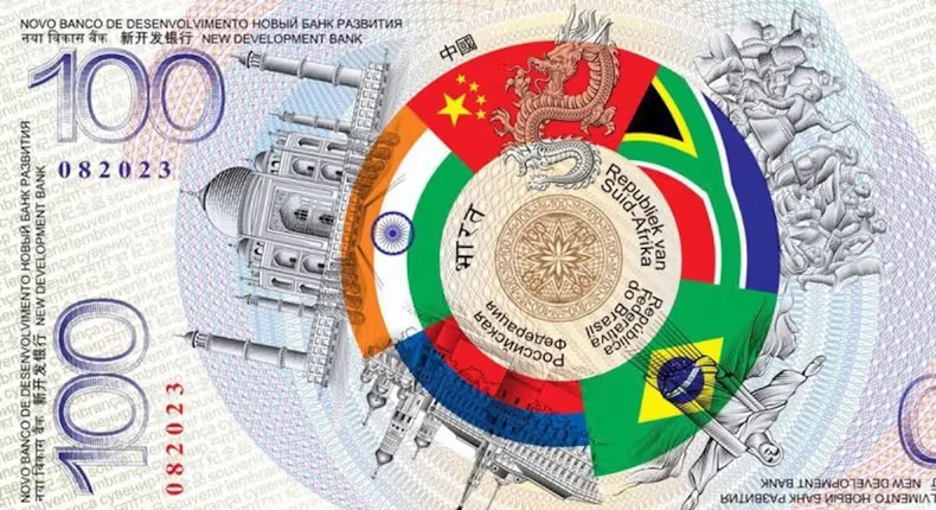
They already have a kind of joint bank institution set up, called the New Development Bank.
And recently, New Development Bank President Dilma Rousseff went on the record to admit that there is a loose plan to create a new kind of currency, called “the Unit,” which she claims will be backed 40% by gold and 60% by the local currencies in the BRICS union.
Rousseff elaborates:
"The basket of gold and the basket of currencies will be minted in the member countries … it will be put into an escrow account, taken off the ledger so to speak — off of their balance sheet and put onto the mBridge ledger, and held in an escrow account in their own borders. It doesn't need to be sent to a central authority."
Perhaps this is all 100% true and already underway.
You don’t have to love the BRICS to understand which currency global traders and investors might prefer to own over the long term. Something backed by gold would offer real stability – and would be outside of the dollar system, which we’ve already seen can be hostile to people who find themselves as enemies of the US Government.
We’ll find out more when the meeting kicks off on July 6th.
Best,
Garrett Goggin, CFA, CMT
Lead Analyst and Founder, Golden Portfolio
P.S. Time is running out to see my latest gold royalties research.
I’ve put together a very urgent report on my 3 favorite gold royalty stocks and after tomorrow, I”m pulling it down.