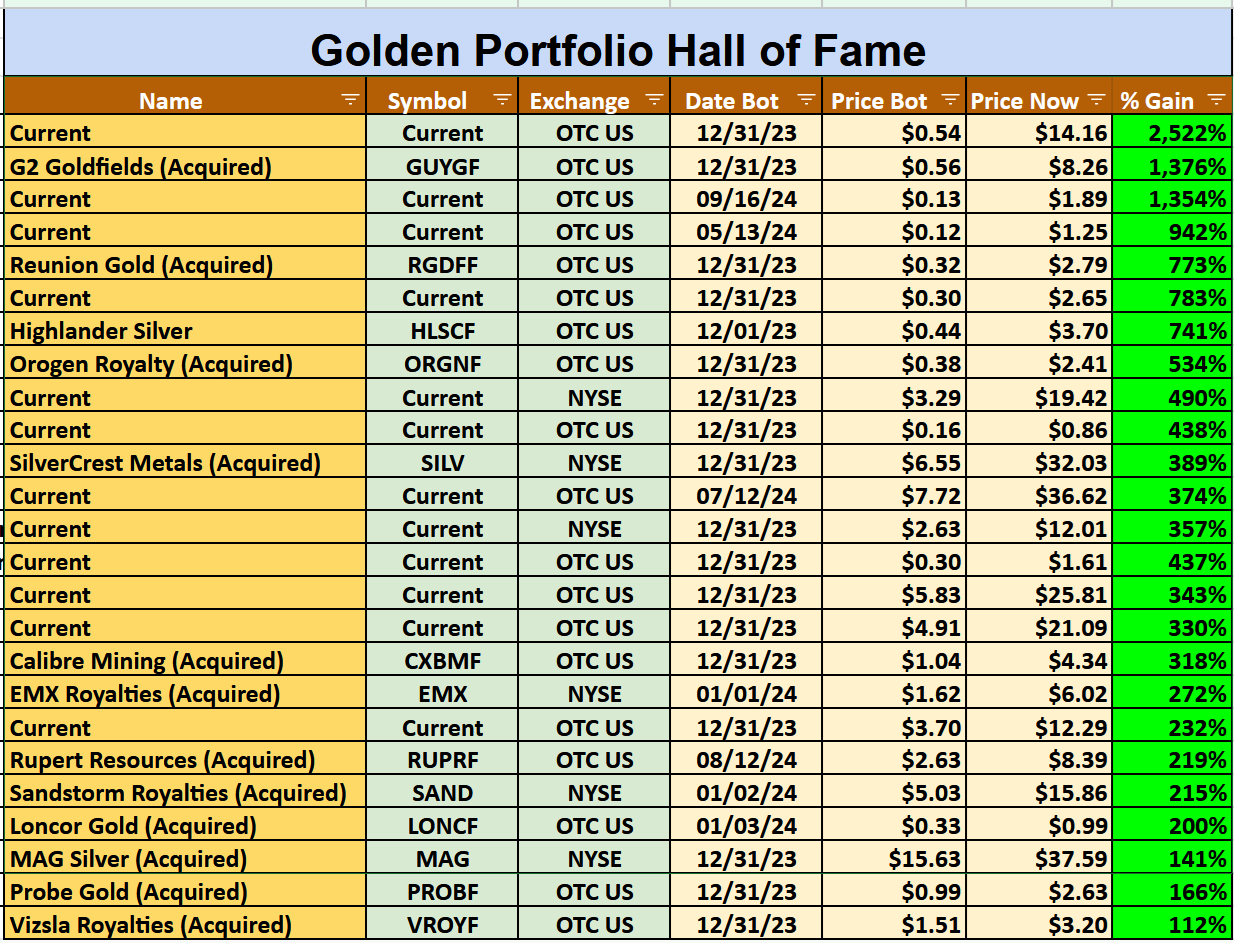
Earlier this week I wrote about how we’re in the beginning stages of a gold major acquisition phase.
As jr. mining stock investors (that’s you and me), we need to be sophisticated about the likelihood and mechanisms for how these acquisitions play out.
First, you need to understand: when a gold major announces they want to acquire a junior explorer/developer/miner, it’s not on a whim. It’s after months (or years) of planning and analysis.
These large cap gold miners know exactly what their run rate is – and when each of their revenue-generating mines is likely to peter out. They know when their development stage projects will come on line. They know that the average exploration stage project takes 10 years to go into production.
And to avoid spooking investors with dwindling revenues, they have to keep the whole operation running consistently, with new projects meshing neatly into the fold as old mines close down.
So when they announce an acquisition, they’re not asking… they’re telling shareholders of the smaller company: we’re buying you out.
Unless the smaller company has the bulk of their outstanding shares in the hands of insiders, then there’s not much that can be done.
The buyout was decided well before the announcement. The rest is just a formality.
If you’re familiar with The Godfather film, you probably remember Michael Corleone (politely but firmly) telling Moe Greene his plans to buy him out of the casino business.
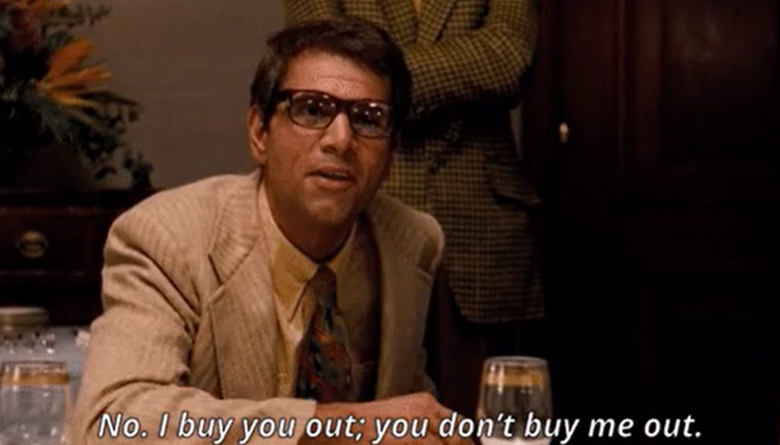
“Michael: My credit good enough to buy you out?
Moe Greene: Buy me out?
Michael: The casino, the hotel. The Corleone Family wants to buy you out.
Moe Greene: The Corleone Family wants to buy me out? No, I buy you out, you don’t buy me out.
Michael: Your casino loses money, maybe we can do better.
Moe Greene: You think I’m skimmin’ off the top, Mike?
Michael: You’re unlucky.”
Moe isn’t happy with this offer. But he should have learned to be okay with it.
As it is with some jr. gold stocks being funded by larger gold miners, the Corleone family had partially bankrolled Moe Greene’s early operations. They weren’t doing so out of the kindness of their hearts.
Gold majors sometimes provide up front capital to smaller explorers – with provisions of “first refusal” where the larger company gets first dibs on latter financing rounds, share issuance and in some cases: ownership of the smaller firm.
If these early projects develop into promising deposits, the small amount of up front funding and “first refusal” terms act like a call option, giving the larger company the right, but not the obligation, to own the whole operation.
In some cases, you can see the takeover coming – like Moe Greene should have.
In those cases, the gold major and the shareholders of the smaller company have a bit of a conflict of interest.
The smaller company’s owners want to get as much value during the potential takeover as possible. The larger company wants to mute any pre-takeover stock price moves.
That’s why you want to own this type of company before the takeover is announced.
One more key part of this whole scenario: the larger company does not want to piss off shareholders of the smaller company – because they typically need buy-in from most of them to get the acquisition approved. In order to smooth things over, the larger company almost always offers a premium over the prevailing stock price.
To put it in Godfather terms: the larger company makes an offer the smaller company’s shareholders can’t refuse.
I’ve recently put together a full write-up on a company that’s going through this exact scenario.
The take-over target is a small developer that’s been funded over the years by a larger gold miner. Now, I believe the takeover is all but imminent.
But we’re in that sweet spot where you can still own shares ahead of any announcement.
Best,
Garrett Goggin, CFA, CMT
Lead Analyst and Founder, Golden Portfolio