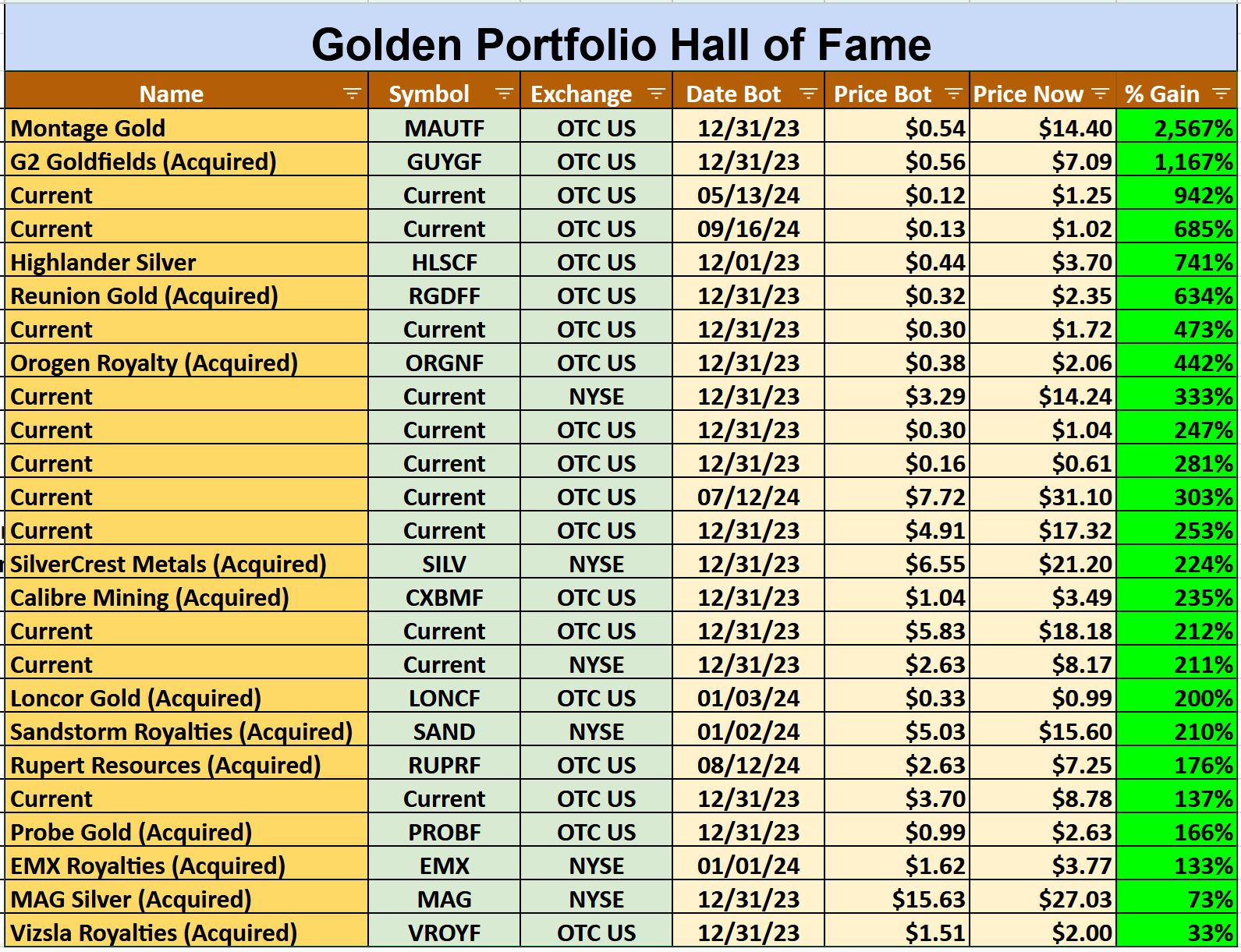
There’s no denying: we’re still in correction mode for gold. It could be that we bottom today, or tomorrow or a month from now, but we have not yet turned the corner.
Usually, when prices languish, most investors stay away. They wait for some kind of obvious signal to buy. I’m here to tell you: there is no obvious signal. It doesn’t happen. You won’t know when the “best” time to buy gold stocks is until months after it happens.
But right now, one group is not waiting. They’re buying as much gold as ever.
I’m talking about central banks, led by China.
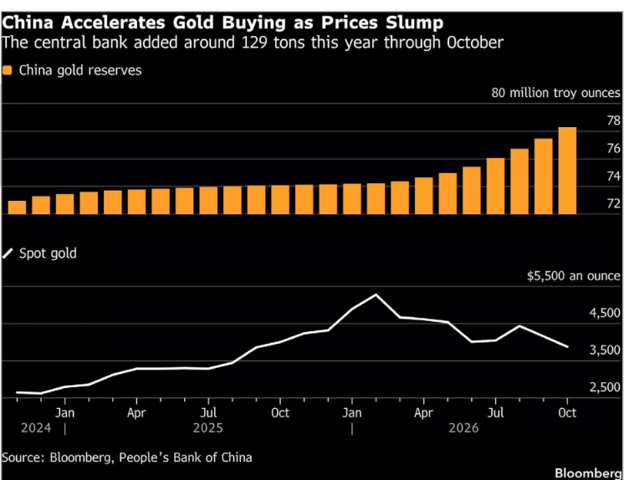
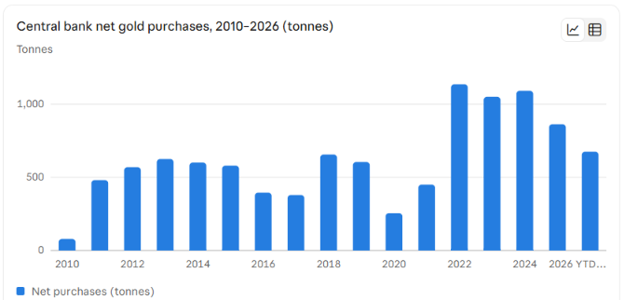
Throughout the past few years of gold’s rise from $2,000 up to $5,500, central banks have been the largest buyers of gold.
That was true in 2022. It was true last year. It’s true today.
This kind of buying is remarkable for a few noteworthy reasons.
1) Central banks spent most of the past 50 years as net sellers. It wasn’t until 2010 that central banks stopped selling and started buying. The buying accelerated starting in 2018 (after the Basel III banking rules elevated gold to a Tier 1 asset), and then really took off in 2022 when the US sanctioned Russia’s dollar assets.
2) This ongoing buying from central banks means that global monetary authorities do not believe in the future purchasing power of the dollar or US Treasury assets. If they did, we would see central banks buying Treasuries. The only central bank consistently buying Treasuries these days is the Federal Reserve. The US just passed $41 trillion in debt – but global debt is now over $350 trillion. Apparently, no one running a central bank believes owning any of this debt is a good way to maintain purchasing power. The assumption is that it will all be defaulted on, by inflation or otherwise. Hence: they buy gold, not sovereign debt, and gold is now a larger share of central bank holdings than any currency.
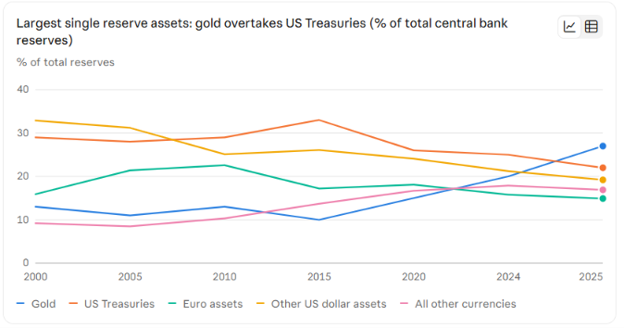
3) Individual gold ownership has not risen along with central bank ownership. It means we have not yet seen a widespread gold bull market embraced by individual investors. Gold ownership as a percentage of retail investor portfolios is still near record lows. The people who chase every bubble until it pops do not yet own any gold or gold stocks. They’re still dabbling in AI, waiting for Nvidia to double again (unlikely.)
The market for gold stocks is still tiny. Central banks are buying gold hand over fist, but the average retail investor has stayed away from gold.
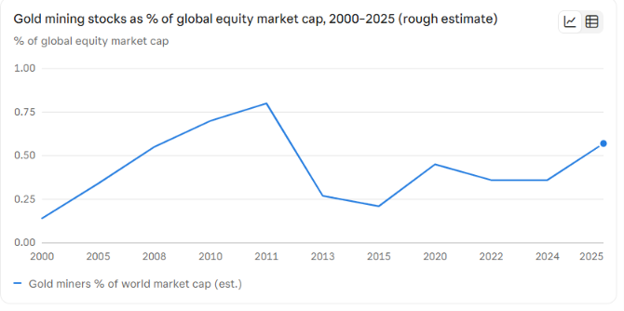
Gold stocks make up less than 1% of the market. The hallmark of a raging bull market is when everyone is piling into the trade. We’re still early – and I hope you’ll view this correction as a time to build positions.
We can never know exactly when the bottom is in – but we can look at long term trends and valuations to make intelligent investment choices.
Best,
Garrett Goggin, CFA, CMT
Lead Analyst and Founder, Golden Portfolio